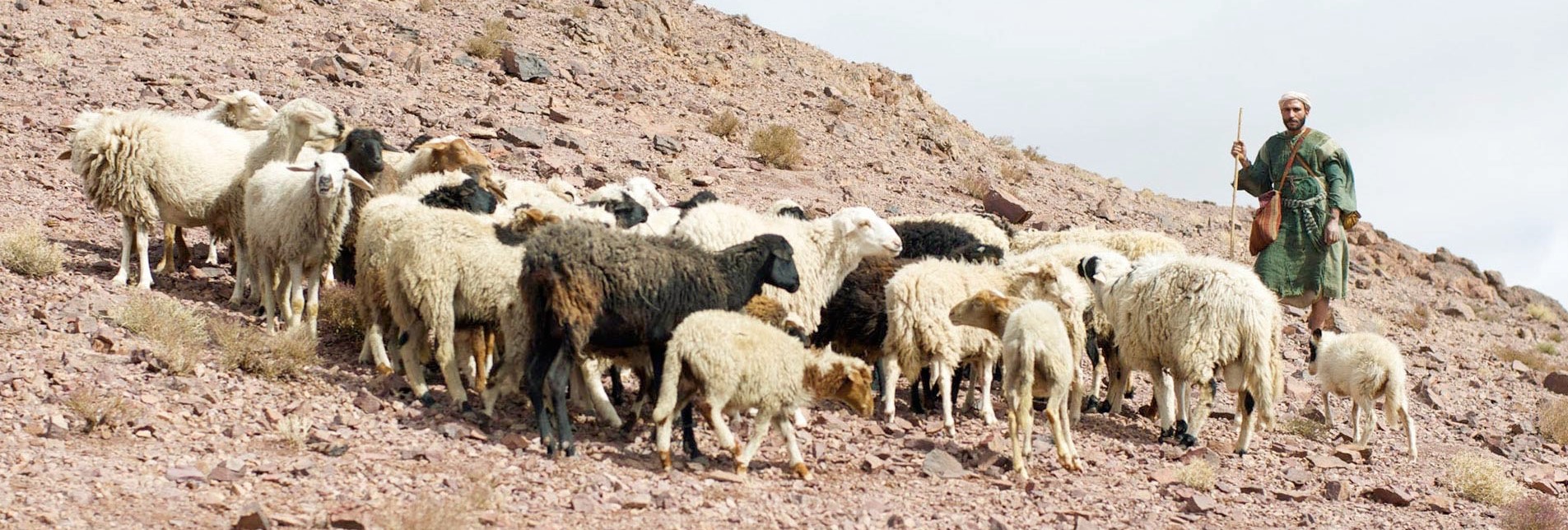
James, who was a fisherman all his life until called to follow Jesus, wonders what it is to be shepherd:
*
I readily admit I don’t know much about sheep. Why should I? I’m a fisherman, not a shepherd!
Oh yes, I’ve seen plenty about – who hasn’t? I’ve worn their wool for my clothes and even eaten their meat occasionally, but I know nothing much about keeping them. That’s someone else’s job, not mine. And I’m glad about that, because from what I hear shepherds have to work quite unsociable hours and most folk don’t like them because they smell. (And that is really saying something, coming from a fisherman, isn’t it!)
In fact, all I know about sheep and shepherding is what I learnt in scripture school. King David was a Shepherd, wasn’t he? And he wrote that amazing song everyone loves about the Lord being his shepherd. Nice! Very comforting!
One of the prophets was a shepherd, wasn’t he? From Tekoa, I think, (wherever that is). Some others used the imagery in a far less positive way. They told how our leaders, who were supposed to shepherd the people, had failed to do so and, in fact, led God’s people astray. We have quite a chequered history, you know! And as a fisherman I’m glad it’s the shepherds, not us, who get blamed for it!
(Now, if you sense a hint of professional rivalry here, let me remind you that not one of the twelve Jesus called to be his disciples was a shepherd – but at least four of us are fishermen! Enough said!)
Jesus was a carpenter before he became a teacher, so you’d not think he’d know much about sheep and shepherds either. But that really isn’t the case. Perhaps it’s because he comes from inland that he knows more. There are a lot of sheep in the hills around Nazareth!
Whatever, Jesus has recently been talking a lot about sheep and shepherds, even telling Peter that if he loves Jesus, he should feed his sheep. Peter admitted to me privately that he felt a lot more comfortable when Jesus called us to be fishers of people. That at least built on things we already knew. Now we’ve got to learn how to be shepherds, it seems. That is quite another story!
As fishermen we are essentially hunter gatherers, not farmers. Each night when we go out in the boat, the hunt is on. Our skill lies in knowing where the fish are most likely to be swimming on any particular day – and in catching them before they get away! If one thing is for certain, you see, the fish would try to escape if they could. The blighters do everything they can to avoid getting caught in our nets. Indeed, we have to fish in silence because if they hear us coming, they hide. The vibrations from our voices carry through the water and, when the fish sense us, they swim! It’s a dicey operation, being a fisherman. I don’t know how many nights we have come back in failure, our nets empty and spirits low.
And this is where it is so different for a shepherd, as Jesus tells it. Believe you me, if we went out calling the fish to us, we would never see any of them! But when the sheep hear the shepherds call, they run to him, not from him. They recognise his voice and know he is safe. They trust him and are ready to follow him, knowing he has their best interests in mind.
Trust like that does not come easily. It takes years to build. But the shepherd was most likely there at their birth and probably helps them to give birth. Every step of the way he is there for them. A good shepherd watches over his flock constantly – even at night. No going him to a comfy bed for him. Instead, he sleeps lightly nearby, laying himself down across the entrance to the sheep-fold. No need for a gate – the shepherd himself is there to keep them safe and secure. And when he leads off in the morning, his sheep follow because they know he is always there to protect and to provide for them. They instinctively know that wherever he takes them, even if it is through dark and scary valleys, it will always be to green fields and fresh water. He knows what they need, so they trust and follow him. They unreservedly know that he is good.
We don’t have any such relationship with the fish we go hunting for. To them, we are quite simply predators, out to trap them. Who can blame them that their natural instinctive is to flee? To be honest, we fishermen are more like the thieves Jesus warns about… come to steal and to destroy. What a contrast to the Good shepherd he names himself – the shepherd who lays down his own life, so that his sheep may live! And by that, he means really live. Freely and fully. He has come, he says, that we may have life in all its fullness. Isn’t that a wonderful thought?
How great it would be to have the kind of relationship that Jesus speaks of! To know and to be known. To trust and be trusted. To be loved and love in return. And all the time to know that there is someone there for you who will give his everything for your sake, even his very life.
This is the life, the relationship with God, that Jesus offers.
But, when he talks like this, there are plenty who do not like it. They accuse him of being a man possessed! How on earth can they think such things when what he says and does is so beautiful? I just don’t understand!
Instead, they press him to declare himself and then they seek more miracles for proof.
But he simply replies that he has spoken, he has proven himself, but they will not accept it. They will not believe, he says, because they will not listen, will not follow, will not know and love him. No, they will not. They refuse to be sheep in his flock. They are more like the frightened, untrusting fish, desperate to escape my nets. They do not know him for who he truly is. They mistrust him, even when all that he offers them is good.
Jesus promises eternal life secured by none other than God the Father. And he says we can trust him on this because he is completely one with the father. Again and again, he assures them that no thief – nor predator of any kind – can ever snatch them out of God’s hands. The tragedy, it seems, is that they do this all by themselves. The sheep reject the shepherd, but without him, they are lost.
*
Now, as I said, I have no experience of being a shepherd. But, the way he speaks, Jesus is inspiring me to want to become one. It strikes me that this new life he is calling us to is one of constant growth and development, constant learning, constantly finding new ways to love and to care. I cannot remain as I am. I must embrace the new challenges he brings.
I will follow the shepherd, because I know that he is good. He has a bigger and fuller life planned for me … and for you. Do you hear his voice? Do you recognise his call? Will you trust yourself to him and follow the shepherd who provides everything you’ll ever need?
 Marking The Moment
Absolutely brilliant yet again NIck! Such sanctified imagination and humour, which adds so much to the interpretation of this well-known Bible passage. Many, many thanks and blessings to you!
LikeLike
thanks Verena,
this one surprised me. it was actually sparked by a comment I gave to Peter in the last reflection, when he reacted to Jesus’ command to ‘feed my sheep’.
LikeLike